FolleMente
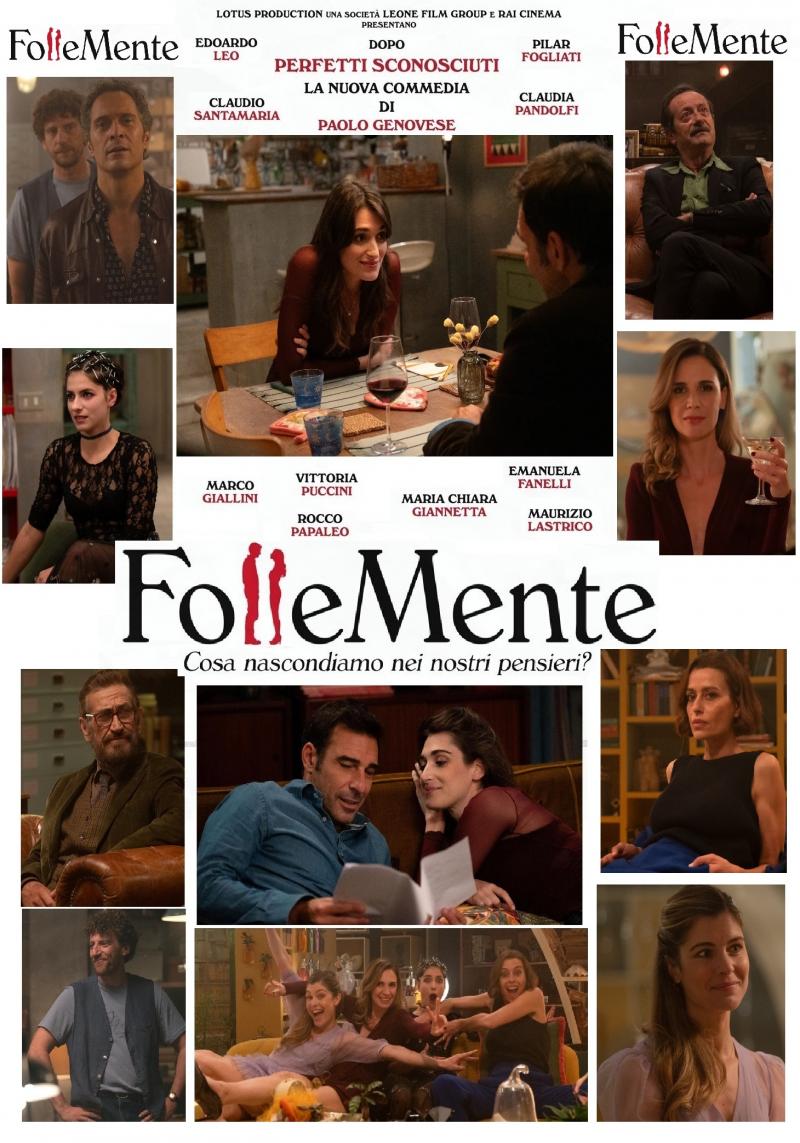
I watched the film Follemente (2025), directed by Paolo Genovese—an enjoyable Italian comedy suggested by Associazione LUI.
The film is somewhat reminiscent of the animated movie Inside Out, in which human beings were driven by little characters living inside each person, deciding what to say and how to behave—only in that case they represented emotions.
Follemente features a star-studded Italian cast: Pilar Fogliati, Edoardo Leo, Emanuela Fanelli, Maria Chiara Giannetta, Claudia Pandolfi, Vittoria Puccini, Marco Giallini, Maurizio Lastrico, Rocco Papaleo, and Claudio Santamaria.
The main characters, Piero and Lara, are animated by four different thoughts or personalities living inside each of them. Piero, played by Edoardo Leo, “hosts” the male characters (Marco Giallini, Maurizio Lastrico, Rocco Papaleo, Claudio Santamaria), while Lara, played by Pilar Fogliati, “hosts” the female ones (Emanuela Fanelli, Maria Chiara Giannetta, Claudia Pandolfi, Vittoria Puccini).
I like the film because it stages the vulnerabilities and thoughts many of us might experience during a first date—how confused, embarrassed, messed up, unresolved, and afraid we are of coming into contact with another person.
Regarding the male-gender perspective that Associazione LUI tries to explore through the content we present, this emerges in various aspects of the film.
First of all, the characters who “run” the protagonists are not exactly symmetrical, revealing a subtle difference between men and women. For Piero we have Romeo, tender and romantic; Valium, crazy and paranoid; Eros, lustful and sensual; and the Professor, rational and judgmental. For Lara, instead, we have Juliet, romantic and dreamy; Tinkerbell, instinctive and sexy; Alpha, ideological and disciplined; and Splinter, irrational and impulsive.
From these characters I noticed, for example, that the Professor lacks emancipatory elements and any pro-feminist spirit—traits that are instead predominant in Alpha. Likewise, Valium’s very name already says a lot, while Splinter seems more like a teenager.
Between laughs, I think the film highlights different stereotypes between men and women that many of us may experience—situations that are (sometimes painfully) familiar and shamelessly comical. It reflects the hesitations that characterize relationships today (“Should I go first, or should you?”, “Feminism or etiquette?”, responsibility or instinct? sincerity or mystery?) in moments when, above all, we would like to be accepted and appreciated for who we are, even while showing ourselves differently from who we really are.
It is interesting how this gender-stereotype difference is emphasized especially during the moment with the ring (a simple trick to patch things up), immediately followed by “you men…”. I won’t go into further detail not to spoil anything for those who want to watch the movie.
Despite everything, the two fragile worlds meet, and Romeo—speaking for the male side—shows himself to be the most decisive in his fragility, defining and defending his own position in order to follow what makes him feel good…
Enjoy the film,
JP