The king’s speech
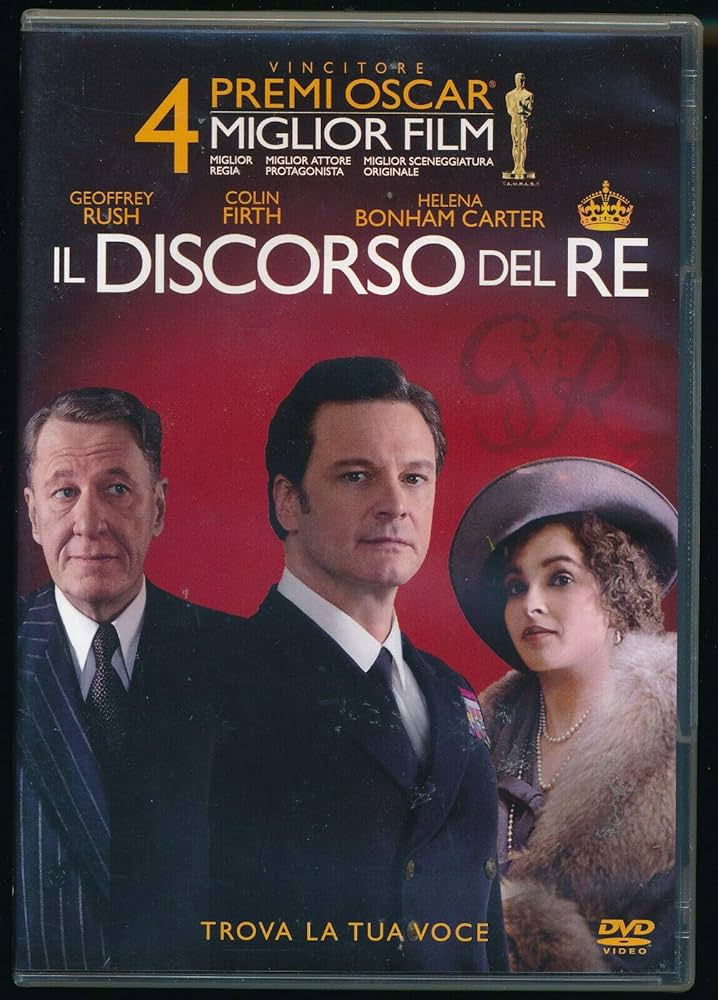
Here’s another film from the LUI Association that I would like to bring to the attention of our audience who read and follow us in our various forms.
The film in question is based on a true story: “The King’s Speech,” from 2010, directed by Tom Hooper and starring Colin Firth, Geoffrey Rush, Helena Bonham Carter, and Guy Pearce. The film tells the true story of King George VI and his stutter. The speech referenced in the film’s title pertains to the announcement to the nation of the declaration of war against Germany and the United Kingdom’s entry into World War II.
Why is this film of such great interest to us at LUI?
There are several reasons. For example, stuttering is more common in men than in women, with about a three-to-one ratio among first-grade children. In this sense, it would be appropriate for the male population to reflect on this issue since it affects us, or at least we should raise awareness about it. Additionally, I personally don’t believe it’s a coincidence that this discomfort occurs more in males than in females, but I’ll spare you my far-fetched gender theories for another time.
Another interesting aspect of the film is the male figures surrounding the future king—doctors who impose on him how he should behave, without considering his feelings. The men accompanying him show little patience and instead seem to pressure him, adding more anxiety than the future king is already experiencing.
I also appreciate that Bernie, as he is affectionately called, soon understands that it is his responsibility to address his fragility, taking on the commitment to resolve the issue by practicing and dedicating himself to the best of his abilities—something not always taken for granted in everyday life.
However, what I like most about the film is the encounter between the two men, Bernie and Lionel (the professional who will help him with his stutter), two individuals from vastly different backgrounds who find themselves sharing their vulnerabilities. On one side is the future king, completely overwhelmed by emotions that prevent him from expressing himself as he wishes; on the other is an aspiring theater professional who knows how to speak well but struggles to convey emotions when it comes to acting.
They share their stories, contaminating each other—one making friends for the first time with a real person, the other allowing a “patient” into his private life, discovering that they are much closer than they might think: fragile, friends, men. It’s also interesting to see how, despite their roles imposed by society at the time, both men manage to show loving attentiveness towards their family members, particularly their children, playing with them, spending time with them, and embracing them.
All these aspects contradict the stereotypes of the “alpha male” and the societal expectations of men at that time.
So, in short, it’s a film to watch with a gender perspective, as the LUI Association appreciates.
JP